

By Okmulgee County Conservation District Jennifer Bailey, District Manager
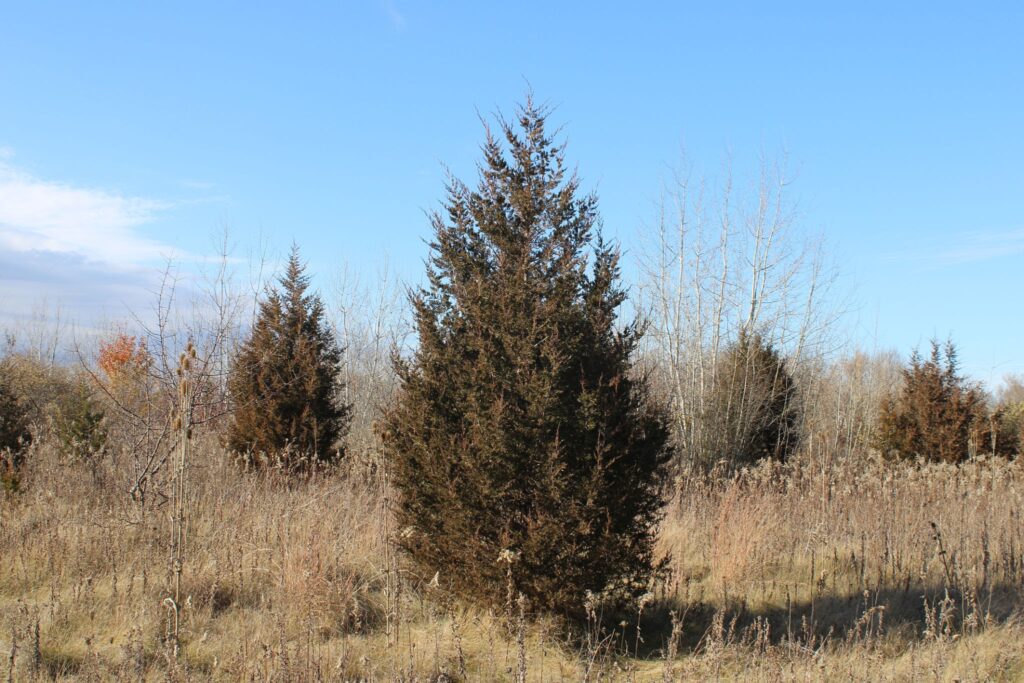
If you are running cattle in Okmulgee County, you’ve likely noticed a quiet invader taking over your pastures: Eastern red cedar.
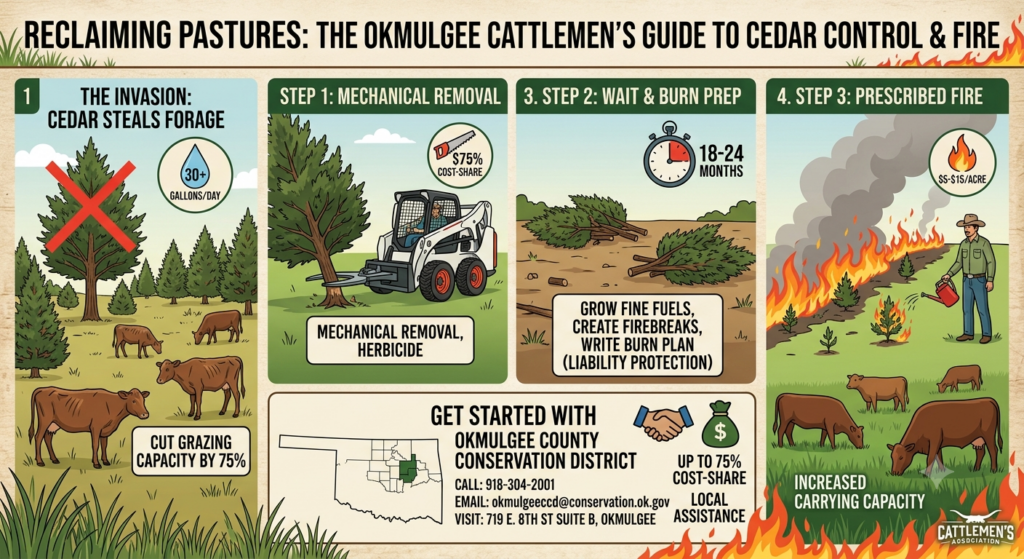
It is easy to ignore a few young cedars scattered across a fence line, but letting them stand is costing you money. A single mature cedar tree can guzzle over 30 gallons of water a day. Once those stands get thick, they crowd out native grasses and can slash your grazing capacity by a staggering 75%. That is prime forage and real profit lost every single season.
The Okmulgee County Conservation District is helping local landowners fight back. Through local cost-share programs and technical assistance, we are making it affordable to reclaim your grasslands.
The Economic Reality of Cedar Infestation
Forage is the backbone of any beef operation. When cedars take over, they do more than just block the view of your herd—they actively drain your bottom line.
The Cost of Doing Nothing | The Benefit of Reclamation |
75% loss in forage & grazing capacity | 25% increase in carrying capacity within 4 years |
Heavy water loss (30+ gal/day per mature tree) | Reclaimed water put directly back into grass production |
High wildfire risk & heavy brush | Better stocker gains & reduced tick/fly populations |
Rising infestation removal costs later | Maintenance burning costs just $5 to $15 per acre |
Your 3-Step Pasture Recovery Plan
Successful local producers who have successfully cleaned up their properties use a proven, three-step rotation to permanently keep cedars at bay:
1.Mechanical Removal:Step 1: Clear the Big Wood.
Cut and clear mature, seed-bearing cedars first. This can be done mechanically (skid steers, chainsaws) or with targeted herbicide applications.
2.The Fuel-Building Phase:Step 2: Wait 18 to 24 Months.
Do not burn immediately. Let fine fuels (native grasses and litter) accumulate for 18–24 months. You need this dry biomass to carry a fire hot enough to kill newly sprouted cedar seedlings.
3.Maintenance Burning:Step 3: Every 3 to 5 Years.
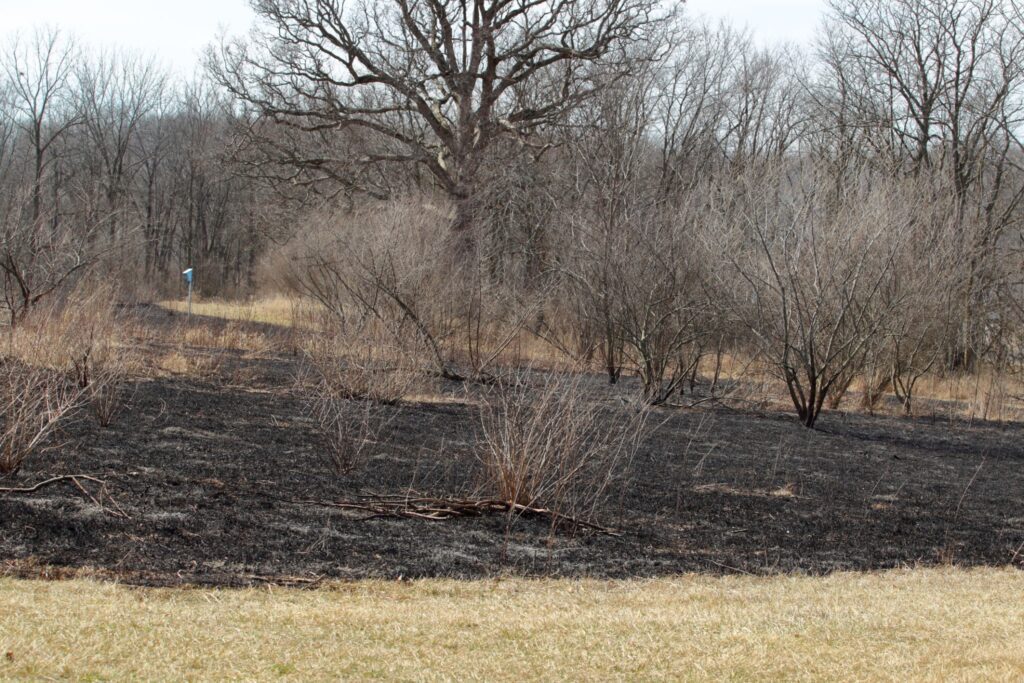
Establish a regular maintenance burn schedule. Prescribed fire is the cheapest tool available to kill small cedars outright before they can mature.
Up to 75% Cost-Share Funding Available
You don’t have to shoulder the cost of pasture reclamation alone. The District provides up to 75% cost-share for mechanical removal, herbicide work, and burn preparation through the State Cost-Share Program.
We also offer free site visits and direct connections to the local Prescribed Burn Association to help you execute safe, effective burns.
A Quick Word on Burn Liability: Oklahoma law provides strong liability protection for landowners who follow a written, approved burn plan, though it does not eliminate all liability. We can help you get your written plan in place.
How to Apply: Beat the Sign-up Deadline
If the brush on your place is getting so thick that you can’t spot your cattle at 100 yards, it is time to act. Funding is limited and sign-ups are coming up fast.
- Call us: 918-304-2001
- Email: okmulgeeccd@conservation.ok.gov
- Stop by the office: 719 E. 8th St, Suite B, Okmulgee, OK 74447
(Monday–Friday, 8:00 AM – 4:30 PM)
Let’s put good fire back on the ground and keep Okmulgee County grasslands working for Oklahoma beef.